
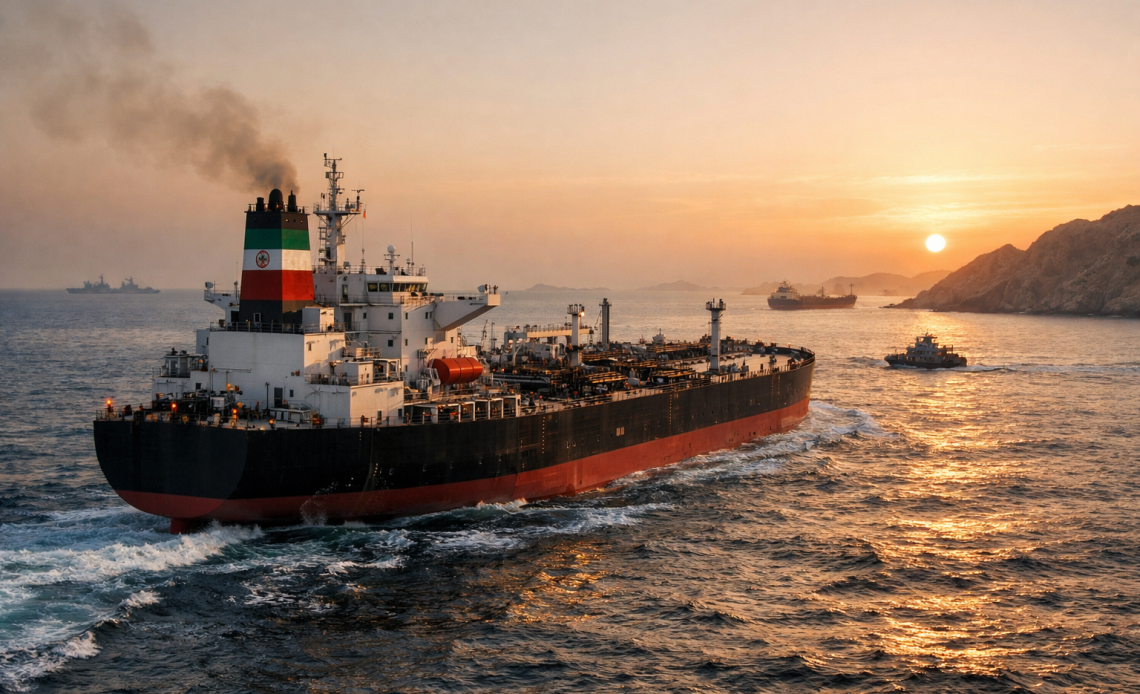
The United States is allowing Iranian oil tankers to pass through the Strait of Hormuz even as tensions escalate in the Persian Gulf following attacks on commercial vessels.
Treasury Secretary Scott Bessent confirmed the approach in an interview with CNBC on Monday, explaining that Washington has permitted Iranian ships to leave the Gulf to help maintain global oil supply.
The move comes as tanker traffic through the strategic waterway has dropped sharply amid the conflict.
The narrow strait remains the most critical route for global oil trade, and disruptions there have pushed crude prices higher.
Despite the presence of US naval forces in the region and attacks on commercial ships, Iranian oil exports continue to move through the route.
Iranian oil exports continue
Iran has continued shipping oil through the Strait of Hormuz despite the security crisis in the Gulf.
Bessent said Iranian vessels have already been departing the region, and the US has allowed those shipments to continue to prevent further tightening of global oil supply.
Iran exports roughly 1.5 million barrels of oil per day.
Much of this crude travels through the Strait before reaching international markets.
The route connects the Persian Gulf to the global shipping network and remains central to energy trade.
Energy markets have been closely tracking Iranian export flows as supply disruptions spread across the region.
The continuation of these shipments has helped prevent an even larger shock to global oil availability at a time when shipping activity in the Gulf remains under pressure.
Tanker traffic remains volatile
Shipping activity through the Strait of Hormuz has dropped sharply since Iran began attacking commercial ships in the Persian Gulf.
The disruption has reduced overall tanker flows and increased risks for vessels operating in the area.
Despite the decline in traffic, some shipments are still moving.
Bessent said tankers delivering crude to India have transited the Strait during the conflict.
The United States also believes some Chinese vessels have exited the Gulf.
Washington expects tanker movements to increase before the US Navy and allied forces begin escorting commercial ships through the waterway.
Officials believe tanker traffic could gradually recover as shipping companies assess security conditions and resume limited voyages through the strait.
Oil prices surge amid supply shock
The conflict involving Iran, the United States, and Israel has triggered a major disruption in energy markets.
Oil prices have climbed about 40% since US and Israeli strikes on Iran began three weeks ago.
The International Energy Agency said the situation represents the largest oil supply disruption in history as exports through the Strait have collapsed.
The disruption has amplified volatility in global energy markets as traders react to changes in shipping patterns and geopolitical developments.
Brent crude surged to $106 and was trading near $102 per barrel at the time of writing, while US crude hovered around $95 after rising near $100.
Bessent also addressed speculation about possible US intervention in oil futures trading.
He said the administration has not taken such action and it remains unclear what authority Washington would have to intervene.
The post US lets Iranian oil tankers pass Hormuz as conflict sends crude soaring appeared first on Invezz